A. TRAINING PROGRAM
a) History of curriculum development
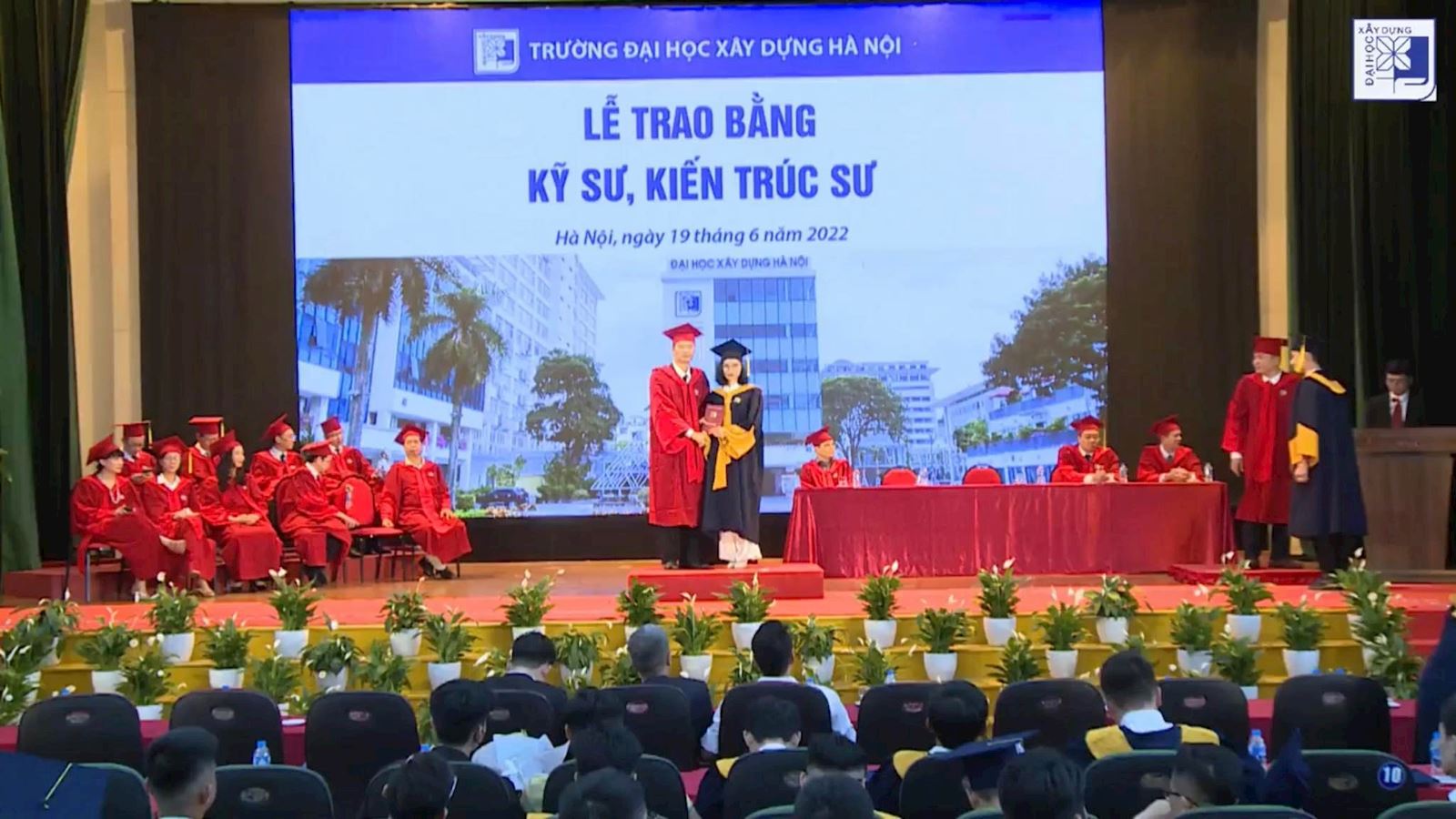
The Information Technology major has been officially offered by Hanoi University of Civil Engineering since 2001 at the Faculty of Information Technology, making it one of the pioneering units in this field in Vietnam, with the mission of providing high-quality human resources to meet the development requirements of the digital economy and modern society.
Over more than 20 years of development, the Information Technology program has been continuously improved towards an outcome-based approach (OBE), integrating digital technology and linking it to professional practice. The faculty has steadily improved in qualifications and expertise, the facilities and laboratories have been modernized and upgraded, and extracurricular activities, business networking, and career support for students have become increasingly diverse and effective.
To date, the Faculty has trained 24 cohorts of Information Technology engineers, with many alumni holding leadership, management, or expert roles in technology companies and organizations both domestically and internationally.
The curriculum was developed in three stages:
- Phase 1 (before 2021): The program is designed with a content-based approach, focusing on equipping students with foundational professional knowledge.
- Phase 2 (from 2022): The program is adjusted to focus on outcomes-based training (OBE), enhancing practical skills, soft skills, and career adaptability.
- Phase 3 (from 2025): The program will be developed according to the University's new strategy, reflecting regional and international integration in training and research.
During the improvement process, the Faculty consulted with stakeholders (lecturers, students, alumni, employers, and industry experts); simultaneously benchmarking against professional standards and international accreditation standards; and comparing the program with equivalent training programs of prestigious international universities, to ensure that the program is aligned with societal needs and future industry development trends.
b) Objectives and Learning Outcomes
The program aims to train information technology engineers with a solid foundation and in-depth knowledge of the field of Information Technology, capable of researching, innovating, and applying knowledge and skills to design, implement, and operate information technology systems, products, and technical solutions.
Prior to 2021, although the program had established learning outcomes, it was primarily focused on content-based training. From 2022 onwards, the program was improved to be based on outcomes-based education (OBE), with six defined outcomes, including three for professional knowledge and two for soft skills (communication and teamwork).
By 2025, the program will be further significantly reformed and expanded from 5 to 9 learning outcomes (PLOs), built to be compatible with The University's UGAs and ULOs, specifically the PLOs, are grouped into three main clusters: Core professional knowledge learning outcomes (PLO1 to PLO5), innovation and digital technology competency learning outcomes (PLO9), and soft skills and professional ethics and responsibility learning outcomes (PLO6 to PLO8). This shift not only enhances transparency, measurability, and effectiveness in evaluating learning outcomes, but also aims for the holistic development of learners in terms of knowledge, skills, and professional attitudes, in line with the practical requirements of society and regional and international quality accreditation standards (such as AUN-QA).
c) Training program framework
The IT engineering program at Hanoi University of Civil Engineering is designed with an Objectives-Based Education (OBE) approach, adhering to AUN_QA standards and the Vietnamese National Qualifications Framework, to fulfill the Faculty's mission and the workforce needs of society. The program comprises 180 credits over 5 years, systematically and logically structured to ensure a balance between fundamental science, foundational subjects, specialization, supplementary skills, internships, and a graduation project. The program structure consists of three main blocks:
- General education: Equipping students with a foundation in scientific thinking and skills. soft skills, foreign languages, and social awareness
- Professional education: Provides in-depth knowledge and skills in programming, databases, networking, artificial intelligence, information security, cloud computing, digital transformation, etc.
- Internships and graduation projects: help students comprehensively apply their knowledge and skills to solve real-world problems and demonstrate their creative and professional abilities.
- The program offers flexible elective courses, allowing students to specialize in areas such as Software Engineering, Computer Networks and Data Communication, Information Security, and more.
- Teaching, learning, and assessment activities are closely linked to learning outcomes, with the participation of businesses and alumni, contributing to a continuous improvement cycle.
Currently, the faculty is offering the following six majors/specializations:
1) Computer Science:
- Computer Science is one of the important fields of study at universities that offer training in information technology in particular and engineering in general. This field is for young people who are passionate about in-depth research in information technology, meeting the requirements for applying information technology in the Fourth Industrial Revolution.
- The training program is built on the CDIO approach (C - Conceive, D - Design, I - Implement, O - Operate) to train engineers who can master and skillfully apply fundamental knowledge of information technology; core knowledge of Computer Science; in-depth knowledge of data science, computer vision, natural language processing, and artificial intelligence; the ability to conceive, design, implement, and operate advanced information technology products and systems; understand the importance and strategic impact of information technology development in society; and understand the trends and applications of information technology in the Fourth Industrial Revolution.
- The training program is imported from the University of Mississippi (USA) and has been adapted to suit the conditions in Vietnam.
- Students receive in-depth training in Computer Science and do not study subjects related to the Construction field (such as concrete, steel, or drawing). Applicants to the program do not need prior knowledge of programming or computers.
2) Multimedia Technology Major:
- Multimedia Technology is a diverse and rich field that combines information technology with art and design to create engaging digital content and multimedia products. Students majoring in this field will be equipped with the knowledge and skills to design and develop multimedia applications and products, including images, audio, video, and other digital content, across various sectors such as education, tourism, entertainment, software, advertising, and media.
- The Bachelor's program in Multimedia Technology at Hanoi University of Civil Engineering integrates fundamental subjects in graphic design and communication, core knowledge of information technology, advanced skills in multimedia application programming, multimedia project management, digital image and audio processing, digital and interactive communication, and multimedia data analysis.
- Note: The Multimedia Technology major, part of the Information Technology department at Hanoi University of Civil Engineering, does not include courses related to the field of Construction (e.g., structural engineering, architecture, concrete, steel). Applicants for this major do not need prior knowledge of fine arts, programming, or computer skills.
3) Information Technology Sector:
- Information Technology is one of the top-choice majors at technical universities today, given the booming application of digital technology in all aspects of life, economy, and society. The demand for IT professionals in domestic and international businesses is constantly increasing, opening up vast career opportunities for students studying this field.
- This program is designed for young people passionate about technology, who love creativity, and aspire to master information technology knowledge and realize their ideas into useful technological products and services for life. Students are equipped with a solid foundation in programming, databases, computer networks, information systems, along with in-depth skills in software development, system administration, network technology, and new technological trends in the digital transformation era.
- Information Technology Engineers at Hanoi University of Civil Engineering receive comprehensive training, enabling them to work independently or in teams on technology projects, design and operate modern information systems, and adapt to both domestic and international work environments. Students are also encouraged to develop communication skills, creative thinking, entrepreneurial spirit, and self-learning abilities for long-term career development in the field. Students majoring in Information Technology at Hanoi University of Civil Engineering will receive in-depth training in information technology and will not study subjects related to the construction field (such as technical drawing, concrete structures, steel structures). Applicants to the program are not required to have prior knowledge of programming or computers.
4) Construction Informatics:
- The Construction Informatics program began training students in 1991, under the management of the Informatics Department, a branch of the Faculty of Bridge and Road Engineering. The first cohort was K36. In 2001, the Faculty of Information Technology was established. According to Decision No. 497/2001/QD-TCCB, the Informatics Department was split into two new departments: Software Technology and Systems Engineering. During this period, the Software Technology Department continued to be responsible for training students in Construction Informatics. On January 10, 2005, according to Decision No. 10/2005/QD-TCCB of the Rector of the University of Construction, the Construction Informatics Department was officially established. The founding members included: Assoc. Prof. Dr. Vu Truong Son, Assoc. Prof. Eng. Le Trong Hoa, Assoc. Prof. Dr. Dao Tang Kiem, Assoc. Prof. Eng. Nguyen Ngoc Chau, Assoc. Prof. Dr. Hoang Chinh Nhan, Assoc. Prof. Eng. Nguyen Phu Quang, and Assoc. Prof. Tran Anh Binh. From this point onwards, the Department of Construction Informatics has been directly responsible for training in the field of Construction Informatics. To date, more than 1300 Construction Informatics engineers have graduated, contributing a highly qualified workforce to the fields of design, project management, application programming, model simulation, and IT applications in construction.
- In recent years, the Construction Informatics training program has been continuously updated to keep pace with new technological trends, aiming to meet the increasingly diverse needs of the modern construction market. Besides maintaining and enhancing a solid foundation of professional knowledge in construction , preparing students to participate in the design of civil and industrial construction projects , the program also focuses on developing advanced technological skills, including:
- Building Information Modeling (BIM) : Helps students master modeling technology and manage information synchronously throughout the entire building lifecycle – from design and construction to operation.
- Artificial Intelligence (AI) and Big Data Analytics : Applications in design optimization, structural and load forecasting, schedule management, construction quality control, and the development of smart city solutions.
- In addition, students are equipped with programming skills, application software development, numerical simulation, technical information systems management, and soft skills in communication, teamwork, and critical thinking – creating a solid foundation for career development in a multidisciplinary, modern, and globalized work environment.
5) Data Science Major
- In today's digital age, data has become an incredibly important resource for many aspects of life. The explosion of information technology and the continuous development of internet-connected devices have generated enormous amounts of data. Data science provides organizations and businesses with the ability to make data-driven decisions rather than relying on intuition. Through data analysis, managers can identify trends, predict the future, and make more accurate decisions, thereby enhancing operational efficiency and minimizing risks. In today's fiercely competitive environment, the ability to leverage data to create a competitive advantage is crucial. Companies can use data science to optimize marketing strategies, improve customer experience, and develop new products/services to meet market needs. Beyond business, data science also plays a vital role in other fields such as healthcare, education, and public administration. Data science is not just a passing trend; it has become an indispensable element in many aspects of life. With its ability to transform data into valuable knowledge, data science is and will continue to play a crucial role in the development of global society and the economy.
- Data science is the foundation of many advanced technologies such as artificial intelligence, machine learning, and big data. Research and applications of data science can create significant breakthroughs, contributing to enhancing a nation's competitiveness on the global technology map.
- The Data Science program at Hanoi University of Civil Engineering combines knowledge of mathematics, statistics, and information technology with specialized practical skills in machine learning/data mining, data analysis, processing and visualization, deep learning, and computer vision. In addition, students gain access to specialized applied knowledge such as the application of data science and artificial intelligence to data processing in fields like bioinformatics, speech processing, smart cities, and environmental science. This ensures that graduates possess the necessary knowledge and skills to meet the demands of the data science and artificial intelligence job market.
6) Information Security Major
- Information Security is a leading field of study within the Information Technology group, focusing on in-depth training in system security, network security, cyberattack prevention, and data protection. With the explosion of digital transformation, information security has become a mandatory requirement for all organizations, businesses, and government agencies.
- The Information Security specialization program at Hanoi University of Civil Engineering equips students with a solid foundation of knowledge in Information Technology in general and in-depth skills in Information Security. Students are trained to be able to design, operate, monitor, and protect information systems in various environments, while also developing skills in analyzing, assessing risks, and responding to cybersecurity incidents.
- Engineer The Information Technology program specializing in Information Security provides students with a broad foundation of knowledge in Information Technology, specializing in the field of Information Security. Graduates are capable of working in various positions such as information security risk analysis, security incident handling, and designing secure architectures for network systems and applications. In addition, students are equipped with soft skills such as communication, teamwork, and self-learning skills to adapt to the rapid changes in the technology field.
- Students will receive in-depth training in Information Technology and Information Security, and will not study subjects related to the Construction field (e.g., drawing, concrete, steel). Applicants to the program do not need prior knowledge of programming or computers.
B. TRAINING PLAN AND PROGRAM
INFORMATION TECHNOLOGY (SOFTWARE TECHNOLOGY SPECIALIZATION )
INFORMATION TECHNOLOGY (SPECIALIZING IN NETWORKS AND INFORMATION SYSTEMS)