FACULTY OF INFORMATION TECHNOLOGY
a) History of the Faculty's Development
The Faculty of Information Technology was established by Decision No. 527/QD-BGD&ĐT-TCCB dated January 22, 2001, of the Minister of Education and Training, based on the merger of two departments: Informatics and Mathematics. The predecessor of the Informatics department was the "Computational Methods and Design Automation" department, established in 1970 – one of the first IT units in the Vietnamese higher education system. Over more than two decades of development, the Faculty has expanded its scale, diversified its programs, and improved the quality of training and research. Currently, the Faculty has 7 specialized departments, with a staff of 66 lecturers and faculty members in charge of 6 majors/specializations. With the orientation of developing into a prestigious training and research center, the Faculty of Information Technology – HUCE is affirming its position in the Vietnamese and regional higher education system.
b) Vision, mission, and development strategy
- Mission: To train high-quality human resources in the field of information technology; to develop knowledge, conduct applied research, and transfer digital technology; to accompany society in the digital transformation process and build a sustainable future. The Faculty's mission is consistent with the mission of Hanoi University of Civil Engineering, which is "Co-creation for the sustainable development of society and the country".
- Vision: To become a leading and reputable training and research institution in digital technology in the region, playing a pioneering role in innovation, digital transformation, and technology application in the fields of engineering, construction, and smart cities.
- Development strategy: Striving to become a reputable training, research, and technology transfer unit in the field of information technology and interdisciplinary applications in construction and urban infrastructure.
Key KPIs in the strategy include:
- Complete the AUN-QA accreditation for the Information Technology and Computer Science programs in 2026, and 100% of the programs under the Faculty's responsibility before 2030.
- Open at least two new majors and achieve five research projects at the ministerial level or equivalent.
- Increase international publications (Scopus/ISI) by 10% annually and organize international scientific conferences starting in 2028.
- Achieve a rate of ≥40% of faculty members holding doctoral degrees by 2030.
- Signed five new Memorandums of Understanding (MoUs) with universities, research institutes, and businesses both domestically and internationally.
- Develop a digital learning environment and implement blended learning and e-learning models.
c) Organizational structure of the Faculty
The Faculty's organizational structure is implemented according to the Regulations of Hanoi University of Civil Engineering. The Faculty's organizational chart is shown in Figure 1.2.
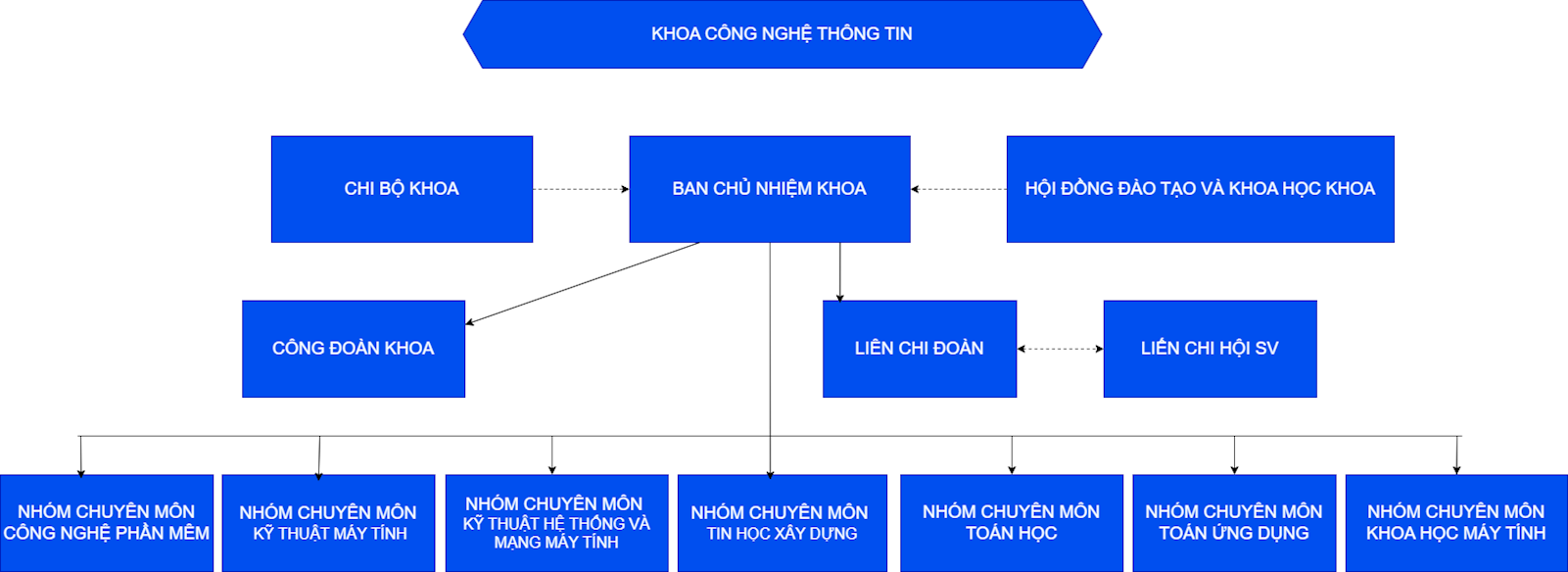
Figure 1.2. Organizational chart of the Faculty of Information Technology
Currently, the Faculty of Information Technology has nearly 66 faculty members, including 2 Associate Professors, 21 PhDs, and 7 doctoral candidates studying and researching at educational institutions both domestically and internationally. The faculty members are well-trained and possess in-depth expertise in various fields such as artificial intelligence, machine learning, big data, information security, and IT applications in construction. This is a crucial foundation for ensuring the quality of training, research, and technology transfer within the Faculty's development and international integration process.
ght:120%">d) Functions and responsibilities
The Department of Information Technology has the following main functions and responsibilities:
- Training: The Faculty offers undergraduate training with engineering programs in the following fields:
- Information technology encompasses specialized areas such as Computer Networks and Data Communications, and Software Engineering.
- Computer science;
- Data science,
- Information Technology/Information Security major;
- Information Technology major specializing in Multimedia Technology;
- Civil Engineering/Construction Informatics specialization.
These disciplines are gradually accumulating experience, refining their programs and staff, in order to develop into independent training programs in the near future.
- Scientific research, consulting, and technology transfer: The Faculty is gradually promoting scientific research, innovation, and digital technology transfer to serve the needs of society and businesses. Over the past five years, the Faculty has led and participated in numerous scientific and technological projects at various levels, focusing on mathematics, artificial intelligence, information security, IoT, and the application of IT in construction and smart cities.
- Collaborative training and business connections: Since its establishment, the Faculty of Information Technology has established cooperative relationships with numerous universities, research institutes, and businesses both domestically and internationally to enhance the quality of training, research, and innovation.
- Domestic training institutions: Posts and Telecommunications University, Transport University, Cryptography Technical Academy.
- Businesses: Viettel Solutions Corporation, Nhan Hoa Company Limited, VNPT IT Center, FPT Software (FSoft), VSL Corporation, DaiwaHouse Company, and many other IT businesses.
Through its network of experts and collaborators from businesses, the Faculty regularly organizes internships and seminars, contributing to the connection between training and the actual needs of the labor market.